
Dallas Local
HVAC Duct Installation in Dallas
Properly sized, sealed, and installed ductwork that moves conditioned air where it belongs.
Request an estimate
Tell us what you need
Dallas HVAC Duct Installation Done Right
Jones Mechanical handles HVAC duct installation in Dallas for new construction, full replacements, and system additions across the metro. If your home has rooms that never cool down, sky-high utility bills, or an HVAC unit that runs constantly, the ductwork is usually the place to look first. Call Joe at (945) 304-2279 and we'll assess what your system actually needs before any work begins.
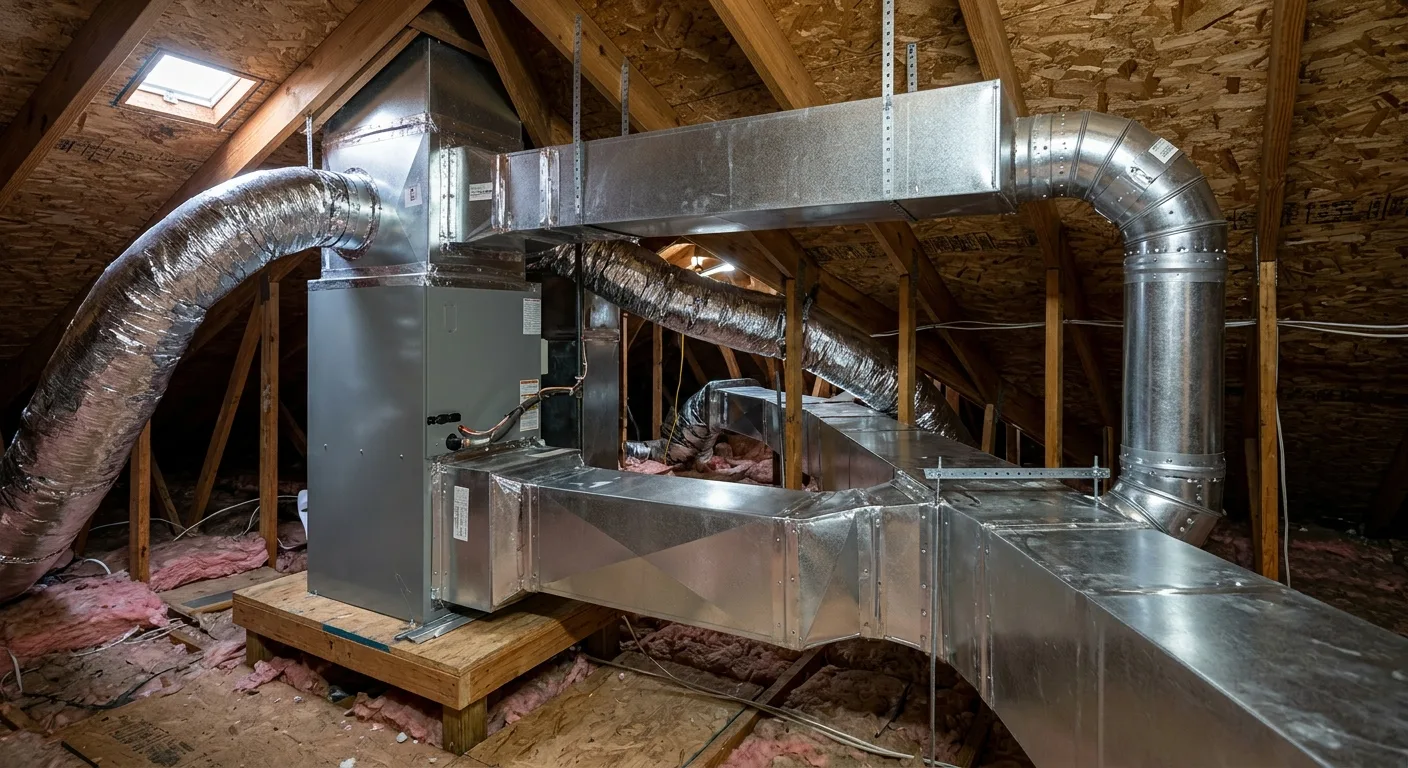
What drives the cost and complexity of a duct installation is rarely the duct material itself. It's the routing path through your attic or crawlspace, the number of supply and return runs required, how well the existing air handler location supports the layout, and whether your home's framing allows for proper trunk sizing. Dallas attics routinely hit 150 degrees Fahrenheit in July, which means insulation value on flex duct and mastic-sealed joints aren't optional extras. They're the difference between a system that lasts and one that leaks 25% of its conditioned air before it reaches a register. Every job is different. Contact Jones Mechanical for an accurate estimate.
What HVAC duct installation covers
- Full ductwork layout design and sizing based on your home's square footage and load
- Installation of rigid sheet metal, flex duct, or fiberglass duct board depending on the application
- Mastic-sealed joints and insulated runs through attic or crawlspace
- Supply and return register placement for balanced airflow dynamics
- Integration with your existing or new [AC installation](/ac-installation/) or heating system
- Final airflow check to confirm delivery at every register
Duct Materials
Rigid, flex, and fiberglass: choosing the right duct
The material you use matters less than how it's installed, but the wrong choice for the application compounds every other problem.
Rigid Sheet Metal
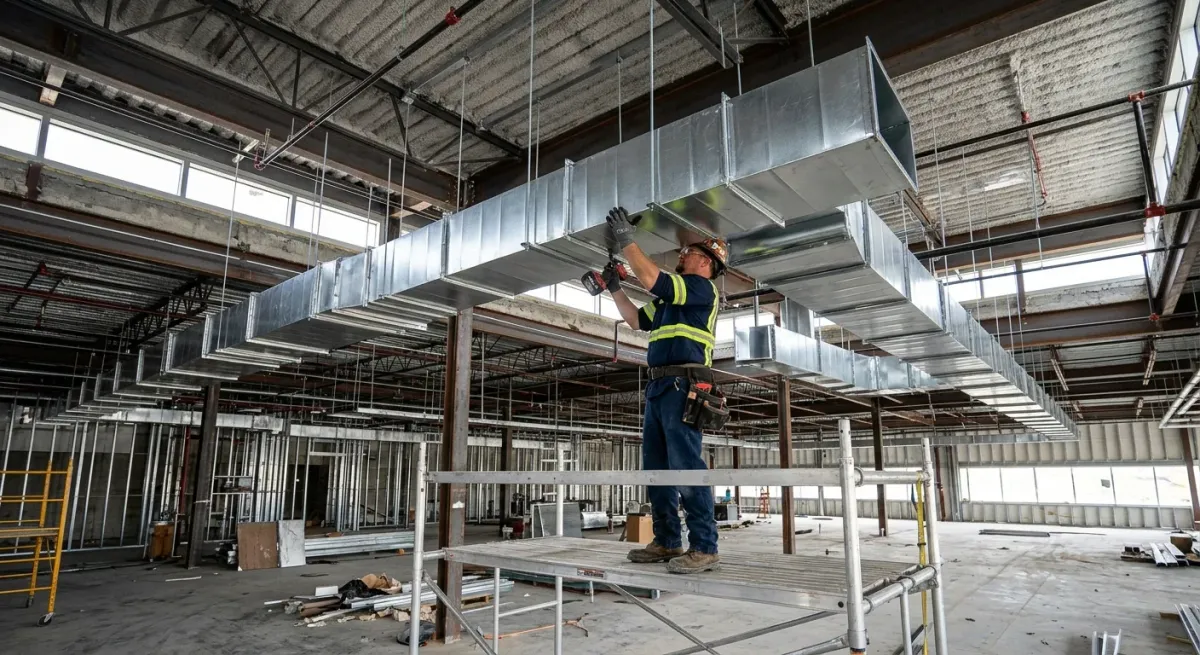
The most durable option for trunk lines and long horizontal runs. Smooth interior walls create lower friction loss, which means your blower doesn't have to work as hard to push air through the system. Rigid duct doesn't sag, doesn't kink, and won't collapse over time the way improperly supported flex duct can.
Flex Duct
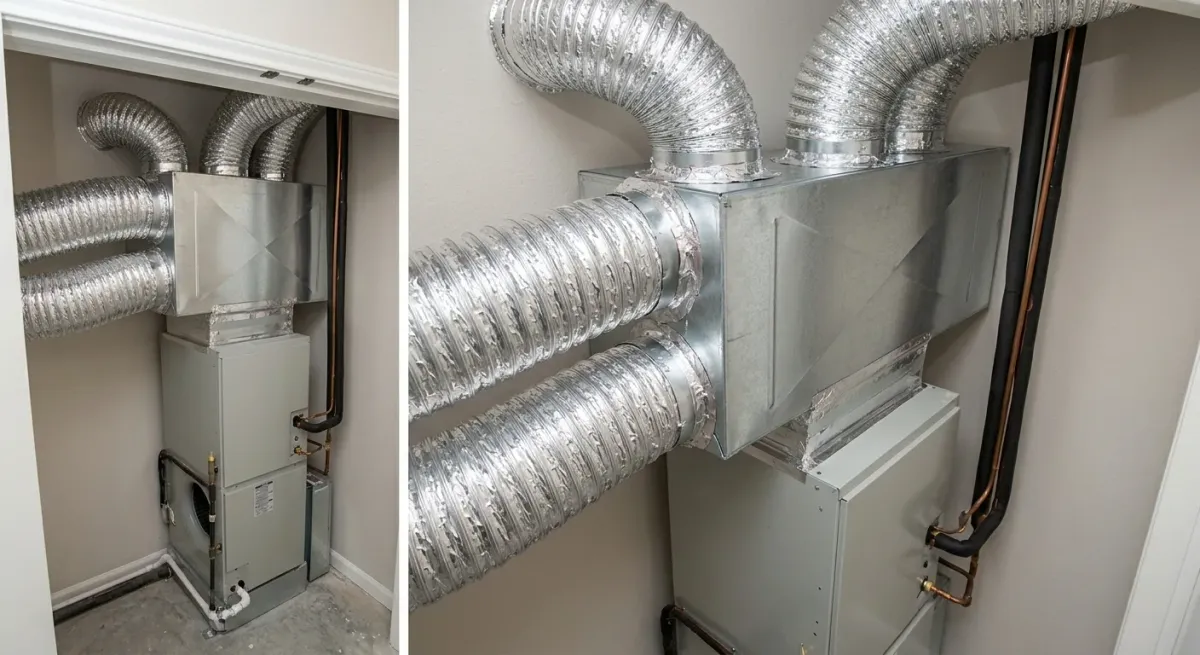
Appropriate for branch runs connecting the trunk to individual registers, particularly where tight turns around framing members are unavoidable. The mistake most installers make is running flex duct in long, unsupported spans or leaving it bunched and kinked. That cuts airflow by 50% or more through those branches and nobody notices until the room is always warm.
Fiberglass Duct Board
Used in certain commercial applications and some residential builds for its integrated insulation value. It's less common in North Texas residential work but has its place in specific configurations. We'll tell you honestly if it makes sense for your job, and if it doesn't, we won't use it.
Code & Sizing
The 2-foot rule and Dallas duct sizing requirements
Common ductwork installation mistakes
Most duct failures we diagnose weren't material failures. They were installation decisions that looked fine at rough-in and caused problems two summers later.
Undersized return air
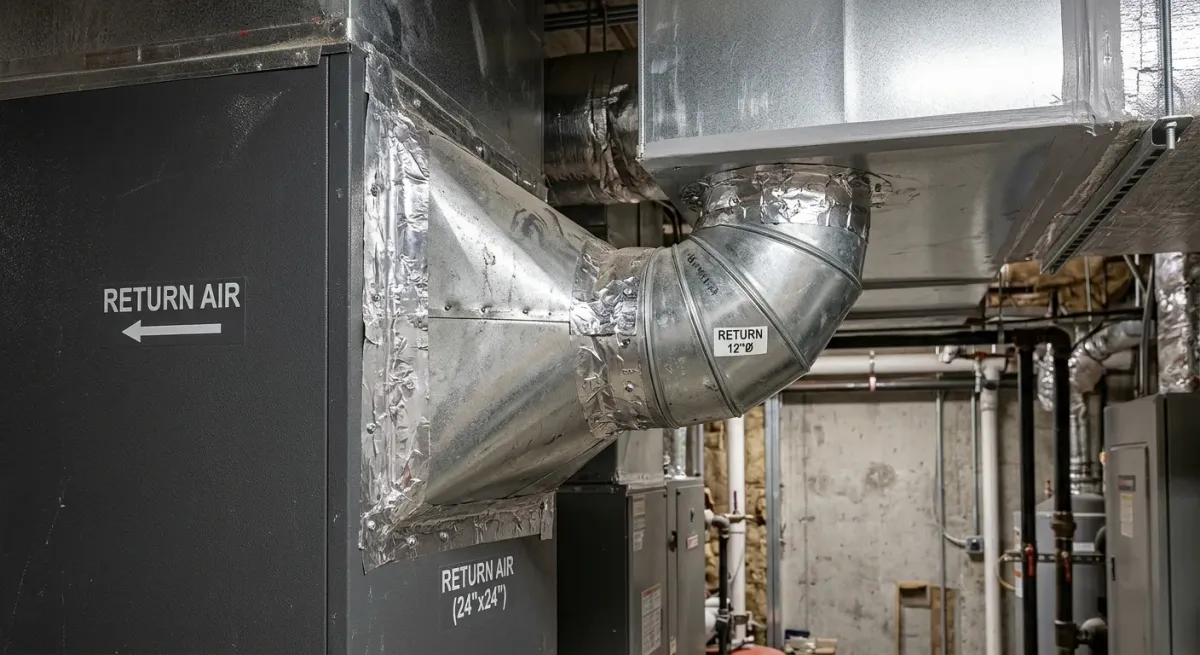
Every cubic foot of air your system pushes out needs a path back. Homes with one undersized central return create negative pressure in bedrooms, which pulls in unconditioned attic air around door frames and recessed lights. We size returns as carefully as supply runs.
Unsealed connections
Sheet metal screws without mastic, or flex duct collars taped with standard duct tape (which delaminates in heat), are the most common source of duct leakage we see. Proper mastic sealing at every joint is not optional in a Texas attic. Duct tape is not a sealant.
Incorrect flex duct tension
Flex duct has an inner liner that must be pulled taut and straight before the outer insulation jacket is secured. Loose liner creates turbulence and restriction. It's a 60-second step that most rushed installations skip, and it's one of the first things we check on a duct and vent repair call.
Poor attic routing
North Texas attics are brutal environments. Duct runs that cross the highest part of the attic without adequate insulation add heat load to your system regardless of how well the duct itself is sealed. Routing matters as much as materials.
When your ductwork needs replacement
System is 15-20+ years old
Flex duct inner liners crack and delaminate over time, particularly in hot attics. If your ductwork predates 2005, a full inspection is worth scheduling before your next system replacement, aging duct negates the efficiency gains of a new unit.
Rooms that won't balance
If you've had your HVAC system serviced repeatedly and certain rooms are still 5-8 degrees warmer than the rest of the house, the problem is almost always in the ductwork design or a collapsed run, not the equipment.
Energy bills rising without explanation
A duct system leaking 20-30% of conditioned air is not unusual in older DFW homes. That leakage shows up directly on your electricity bill every summer. Duct leakage testing using a blower door setup can quantify exactly how much you're losing before we recommend a course of action.
Connecting new ductwork to your HVAC system
Service area: Dallas and the surrounding metro
Jones Mechanical installs ductwork for homeowners throughout Dallas and the broader DFW metro. If you're outside the cities listed here, call and ask.
In the field
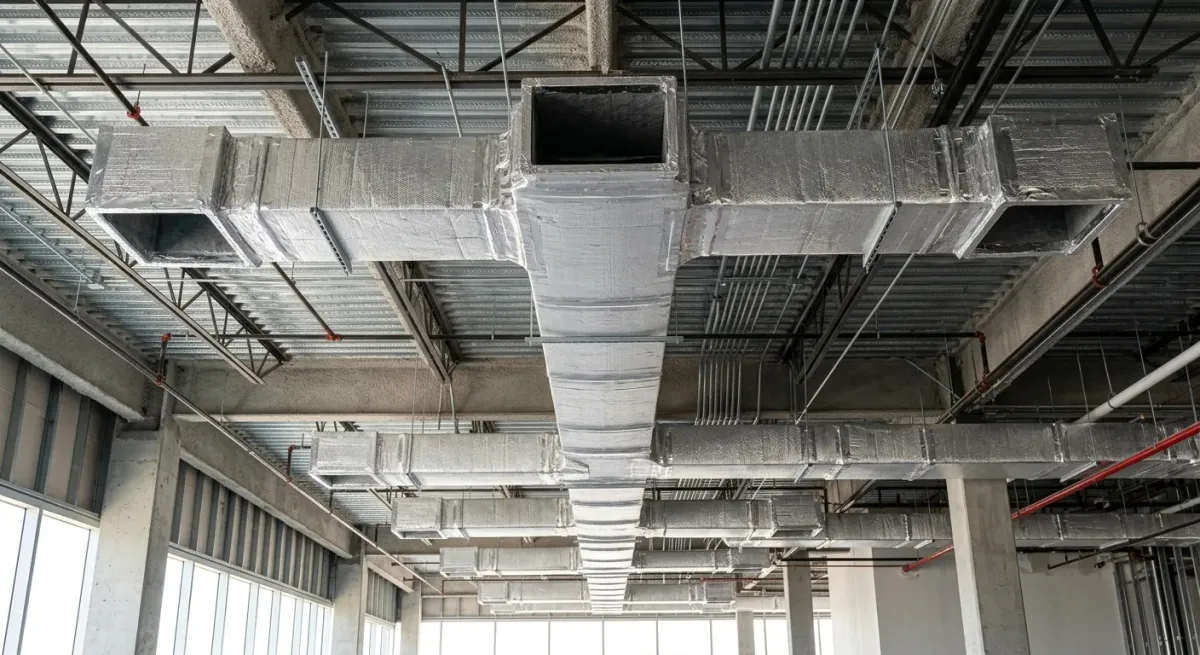
A look at our work
Get a straight answer on your ductwork
If your system isn't moving air the way it should, the ductwork is usually where the answer is. Call Joe directly at (945) 304-2279 and we'll tell you what we're actually looking at before recommending anything.
Jones Mechanical serves Dallas and the DFW metro, Monday through Sunday, 7 AM to 8 PM. No dispatch center. Joe picks up.
Frequently asked questions
How much does it cost to have new ductwork put in?
What is the 2-foot rule in HVAC ductwork?
What is a common mistake in ductwork installation?
Should I replace 20-year-old ductwork?
Is flex duct cheaper than rigid ductwork?
Can I do my own HVAC ductwork in Dallas?
How is ductwork sized and planned for a home?
Related
Next step
Tell us about the job
Your name, your number and what needs doing. A person from Jones Mechanical gets back to you.
Rather talk now?(945) 304-2279
Helpful to mention
- Your town or neighborhood
- What the system is doing (or not doing)
- Roughly how old the equipment is